Monaco GP: Antonelli becomes youngest-ever Monaco winner as red-flag drama and pit-lane chaos define the race
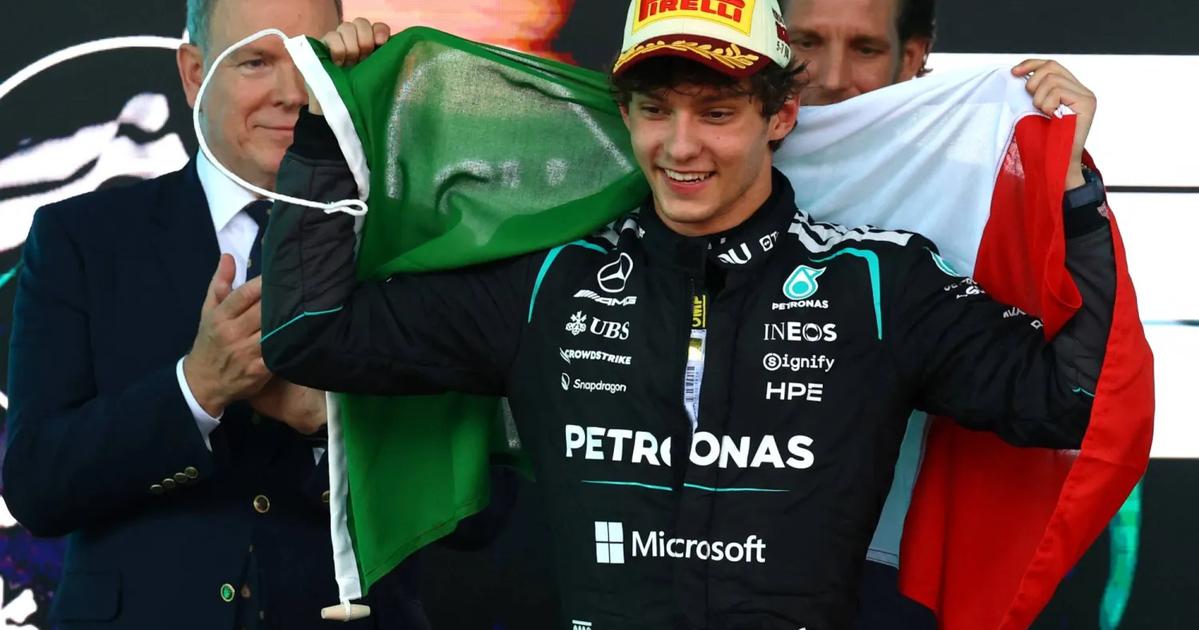
Kimi Antonelli won the Monaco Grand Prix to become the youngest driver ever to take victory in the principality, the 19-year-old Italian converting pole position into a fifth consecutive Formula 1 win and stretching his championship lead to 66 points. On a Sunday that began as one of the dullest Monaco processions in years and ended as one of the most chaotic finishes the circuit has produced this decade, only the winner was ever truly comfortable.
Lewis Hamilton brought his Ferrari home in second, equalling the late Ayrton Senna's record of eight Monaco Grand Prix podiums in the process. Isack Hadjar took his maiden F1 podium for Red Bull from third, in a car that, until a chaotic restart in the closing laps, looked nailed to a low points finish. Behind them lay a wrecked race-card: seven retirements, four pit-lane speeding penalties, a drive-through for the championship's second-best driver, and a red flag triggered by a stretch of broken track surface at Rascasse.
Verstappen's lap one heartbreak
The story of the race began before the lights even went out. Max Verstappen had been second on the grid alongside Antonelli, with Red Bull arriving in Monaco after their most positive qualifying weekend of 2026 and the Dutchman openly speaking of a podium fight. He never got to start.
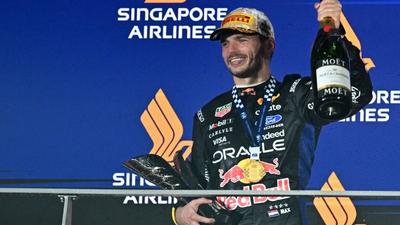
Verstappen reported strange engine behaviour during the formation lap, the power unit refusing to find its target RPM. "I released the clutch and nothing worked," he said afterwards. "It basically dropped dead." Battery power got the car off the line, but a return to internal-combustion produced a sound the Red Bull pit wall didn't like, and Verstappen was waved into the garage at the end of lap one. It is his second retirement of the season and the cruelest, given the weekend's pace. "After such a nice weekend for us, you'd at least hope to be on the podium," he said. "To walk away with zero — it's probably even more painful."
With his closest rival gone before the first run to Sainte-Dévote was complete, Antonelli converted pole into a clean lead and began Monaco's familiar choreography: stay out, do not make a mistake, manage the tyres.
A dull procession, then a broken track
For the first sixty laps, the order at the front did not move. Antonelli led from Hamilton, who in turn led from George Russell — until Russell's afternoon began to unravel through a sequence of small incidents that ended in points-free purgatory. Several drivers were given five-second pit-lane speeding penalties — Hamilton, Pierre Gasly, Oscar Piastri and Lance Stroll all picked up the same infraction — but the order was preserved through the cycle of pit stops because everyone served them at the same window.
I'm Alex Da Costa, a systems engineer with more than ten years of experience designing and maintaining data-heavy infrastructure. I've been watching Formula 1 since the 2005 season — Alonso's first championship, the year Schumacher's seven-title era finally cracked — and it's been an obsession ever since. Pit Lane F1 is what happens when that IT background meets a lifelong F1 habit. I started this site because the big outlets cover the headline result but rarely the data underneath: why a pit-stop window mattered, how a circuit's lap-record history actually compares, what every driver has done at every venue. So I built it. Race recaps for every Grand Prix since 1950, head-to-head career comparisons, telemetry replays for 2024 onward, and per-circuit deep dives — all from open data sources, fact-checked against multiple references, and written in plain language. The site is run independently. No team, driver, or commercial partner influences what gets published. If you spot a factual error or want to suggest a feature, the contact page is the fastest way to reach me.